
You stare at a stack of bills on the kitchen table. Credit cards, a car note, maybe a personal loan from that time you needed a root canal. Every month you send payments, but the balances barely budge. You’ve heard of two popular ways to break free: the debt snowball and the debt avalanche. But which one actually works best in real life, not just on a spreadsheet?
I’ve been there. A few years ago, my husband and I sat in our living room with a pizza and a notepad, arguing about whether to pay off his $400 medical bill or my $3,000 credit card first. He wanted the tiny win; I wanted to crush the high interest. We ended up trying both methods—and the results surprised us. In this guide, I’ll walk you through the real differences, the psychology, and the hard math so you can choose the path that fits your brain and your bank account.
What Is the Debt Snowball Method?
The debt snowball method is the brainchild of personal finance author Dave Ramsey. The idea is brilliantly simple: you list all your debts from smallest to largest balance, regardless of interest rate. You pay the minimum on everything, but you throw every extra dollar at that tiniest debt until it’s gone. Then you roll that payment onto the next smallest, like a snowball rolling downhill, gathering size.
Example: Imagine you have a $500 medical bill at 0% interest, a $1,200 credit card at 22%, and a $8,000 car loan at 6%. With the snowball, you attack the $500 bill first. You knock it out in two months, high-five yourself, and then tackle the $1,200 card with renewed energy.
The magic here is psychological. Small wins release dopamine—the same brain chemical that makes you crave chocolate or likes on social media. A 2026 study by the Financial Health Network found that people using the snowball method were 23% more likely to stick with a repayment plan for one year than those using purely math-based strategies.
What Is the Debt Avalanche Method?
The debt avalanche takes the opposite approach: you rank your debts from the highest interest rate to the lowest. You pay minimums on everything except the debt with the highest APR, where you channel every spare penny. Once that’s dead, you move to the next highest rate.
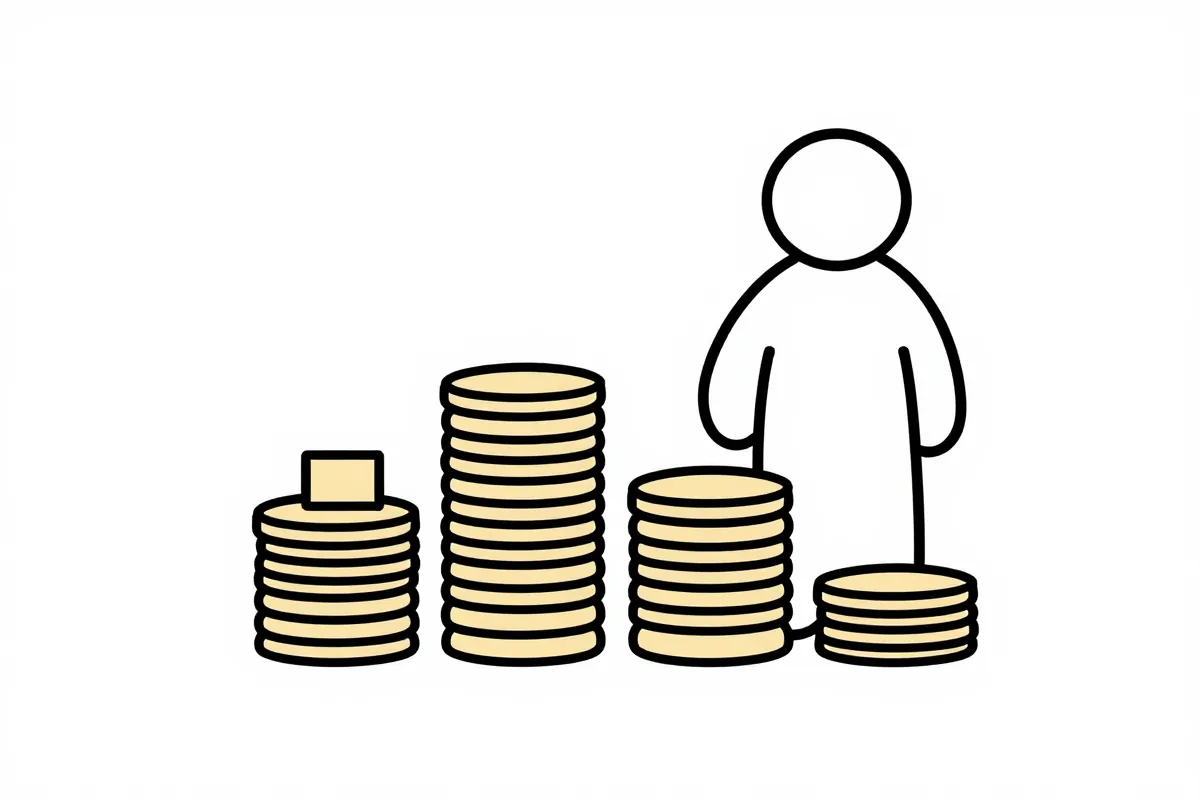
Using the same example: you’d first attack the $1,200 credit card at 22% APR, even though there’s a smaller $500 bill with 0% interest. Mathematically, this saves you the most money because you eliminate the most expensive debt first. In our example, paying off that 22% card before the medical bill could save you over $200 in interest over a year.
The avalanche is the math nerd’s choice. It minimizes total interest and repayment time. Yet, it lacks those quick dopamine hits. If your highest-rate debt is a $20,000 credit line, you might not see a victory for years, and that can wear on your motivation like a slow leak.
Debt Snowball vs Avalanche: The Head-to-Head Comparison
Mathematical Winner
The debt avalanche always wins on paper. No contest. A Harvard Business Review analysis confirmed that prioritizing high-interest debt leads to an average of 12–18% less interest paid over the life of the debts. For a typical American household carrying $6,500 in credit card debt at 20% APR, that’s a savings of $1,100 to $1,700.
Psychological Winner
But we’re not spreadsheets. We’re emotional creatures who binge Netflix and skip the gym even though we know we should go. The snowball often wins the motivation war. According to a 2026 Debt.com survey, 61% of respondents who successfully became debt-free in under two years used the snowball method, citing the “quick win” feeling as the reason they didn’t give up.
Speed of Payoff
If you stay disciplined until the last penny, the avalanche can shave months off your total repayment timeline. But if you’re prone to discouragement, the snowball’s early wins can keep you in the game long enough to finish. A person who quits after six months pays off zero debt—that’s the real cost of ignoring psychology.
Which Is Better for You? A Simple Gut Check
Ask yourself: when you set a big goal, do you need to see progress fast, or are you fine trusting the long-term process? If you’ve tried and failed to stick with budgets before, the snowball might be your lifeline. If you’re someone who loves optimizing and gets a thrill from saving money, the avalanche may click.

Here’s a practical litmus test: open your banking app and look at your smallest debt. Imagine it gone tomorrow. Does that make you want to do a little happy dance? Snowball. If instead you feel annoyed at that 28% retail card draining your account, you might be an avalanche person.
Real-Life Examples and a Personal Anecdote
Let me introduce you to two friends from my neighborhood, both tackling similar debts in 2026.
Maria, the Snowballer: Maria had four debts: a $300 old phone bill, a $700 dental balance, a $2,500 credit card, and a $10,000 student loan. She had been staring at them for years with anxiety. After hearing about the snowball, she paid off the phone bill with her next paycheck. “It was like a light switched on,” she told me. Within eight months she had cleared everything except the student loan, which suddenly felt manageable. She admits she paid more interest, but says “I wouldn’t have made it past month three with the avalanche.”
James, the Avalancher: James is an engineer who tracks his net worth in a spreadsheet. His debt list: $4,500 credit card at 29% APR, $2,000 medical bill at 0%, and a $15,000 car loan at 5%. He knew that credit card was an emergency. He ate beans and rice for three months, killed the card, then rolled that payment to the car. It took 14 months to be debt-free, but he calculated he saved $2,300 in interest compared to the snowball. “For me, seeing the interest stop was its own reward,” he said.
My own story? I started with the avalanche because I hate paying interest. I paid off a 24% store card first. But after six months, my motivation tanked because the balance hardly moved at first. I switched to the snowball for the remaining debts and cleared them in five months. Turns out I’m a hybrid—and that’s perfectly fine.
Step-by-Step: How to Implement Each Strategy
For the Debt Snowball
List all debts by balance, smallest to largest. Ignore interest rates.

Pay the minimum on every debt. Find extra money in your budget (cut subscriptions, sell stuff).
Put all extra cash toward the smallest debt until it’s gone.
Celebrate—then take that whole payment and add it to the next smallest.
Repeat until debt-free.
For the Debt Avalanche
List debts by interest rate, highest to lowest.
Make minimum payments on all, but funnel every extra dollar to the highest-rate debt.

Once the first is paid, redirect those funds to the next highest rate.
Track interest saved each month for motivation.
Stay patient; the early months can feel slow.
Tools and Tech to Make It Easier in 2026
You don’t have to do this with pencil and paper. Apps like Undebt.it, Debt Payoff Planner, and even a simple Google Sheet template can track both methods side by side. Many banking apps now have built-in debt payoff projections. I recommend using a tool that shows you the emotional milestones (snowball) and the interest saved (avalanche) so you can see both sides.
For couples, consider a shared debt tracker and a monthly “money date” to review progress. This keeps both partners engaged, no matter which method you pick.
Common Mistakes That Sabotage Both Methods
Adding new debt while trying to pay old. It’s like digging a hole with one hand and filling it with the other. Pause credit card use until you’re debt-free.

Not building a tiny emergency fund first. Even $500 can stop you from swiping a card for a flat tire. Without it, one surprise expense can collapse your plan.
Choosing a method that doesn’t match your personality. If you’re a reward-driven person and choose the avalanche, you might quit. Pick the one that aligns with your habits, even if it’s not perfectly optimal.
Setting unrealistically large extra payments. If you over-sacrifice, you’ll rebel. Start with a manageable extra amount, then increase it after small wins.
Conclusion: Choose the Strategy You’ll Actually Finish
The “best” method in the debt snowball vs avalanche debate isn’t about math alone. It’s about which path turns your debt payoff journey from a painful slog into a winnable game. If you need quick victories, snowball your way to freedom. If you want to minimize every dollar lost to interest, avalanche forward with discipline. And if neither feels perfect, blend them: avalanche the high-interest debts first, then snowball the rest.
In 2026, with interest rates still elevated and household debt at record levels, taking action matters more than the exact route you choose. Start today. List your debts. Pick a strategy. Set up a $50 extra payment on the target debt right now, before you close this tab. You’ll be amazed how quickly momentum builds once you decide.
Sources
- The following resources provide additional data and tools used in this article:
- NerdWallet: Debt Snowball vs. Avalanche
- Debt.com: Which Debt Payoff Method Is Right For You?
- Financial Health Network: Consumer Debt Research